In brief
- A plug adapter changes the plug shape; it doesn’t change the voltage.
- Many phone and laptop chargers accept 100 to 240 volts, so they only need an adapter.
- Heat-producing devices such as hair dryers are often single-voltage and can be damaged abroad.
- A compact universal adapter and a multi-port USB charger cover most trips.
Electrical outlets vary around the world in two ways: the shape of the plug and the voltage of the supply. Knowing the difference saves you from carrying a heavy converter you don’t need, or from damaging a device you rely on.
Adapter or converter?
| Plug adapter | Voltage converter | |
|---|---|---|
| What it does | Changes the plug shape | Changes the voltage |
| Size | Small | Bulkier |
| Needed for | Dual-voltage devices | Single-voltage devices |
| Common uses | Phones, laptops, cameras | Some hair tools and older appliances |
Read the label
Look at the small print on your charger or power brick:
- Input: 100-240V means the device is dual-voltage, and you only need a plug adapter.
- Input: 120V alone means the device is single-voltage. On a 220 to 240 volt supply, it needs a converter or should stay home.
Caution: Heat-producing devices such as hair dryers, straighteners and curling irons are often single-voltage. Plugging one into a higher-voltage supply with only an adapter can damage it and create a safety risk.
Plug types at a glance
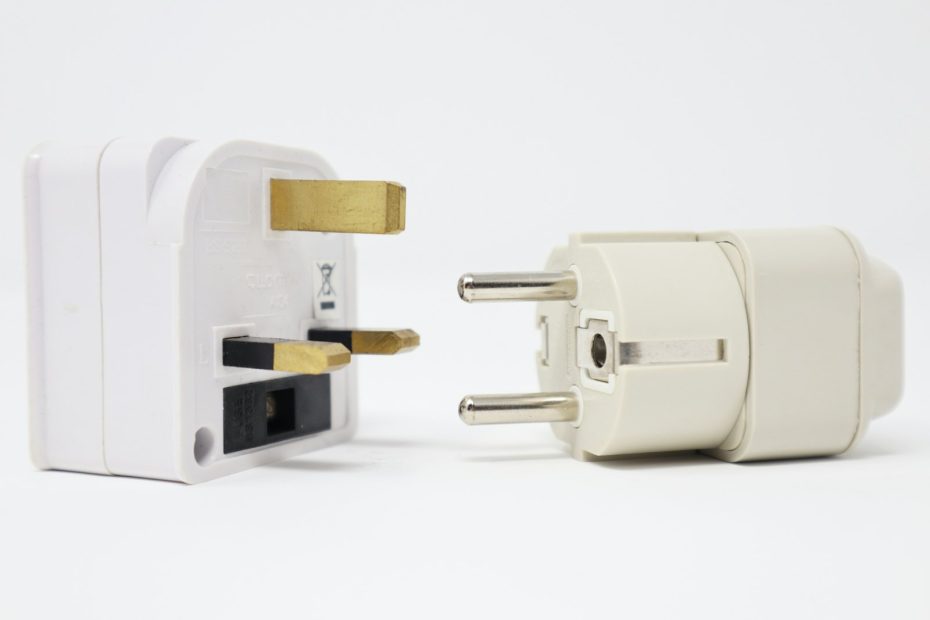
- Types A and B: flat pins, used in the US, Canada, Mexico and Japan, among others.
- Type C: two round pins, common across much of Europe.
- Type G: three rectangular pins, used in the UK and Ireland.
- Type I: angled flat pins, used in Australia and New Zealand.
Some countries use more than one type, so check your destination before you go.
What to pack
- A compact universal adapter that fits the plug types on your route.
- A multi-port USB charger that powers several devices from one outlet.
- Short cables for each device, plus one spare.
Try this: Count your devices before you leave. One multi-port USB charger and a single adapter often replace three or four separate plugs.
Charging on the move
- Hotel rooms don’t always have outlets near the bed, so a short extension cable for USB can help.
- Charge the essentials first, such as your phone and power bank, when outlets are limited.
- Keep your adapter in your daypack on travel days, not in checked luggage.
Charging safely
- Buy chargers and adapters from reputable sellers, and look for recognized safety certification marks.
- Don’t cover chargers with bedding or clothing while they’re in use; they need to shed heat.
- Stop using any charger or cable that gets unusually hot, smells or shows damage.
- Unplug adapters when you head out for the day.
The bottom line
Check the input label on each device. If it says 100-240V, pack an adapter. If it’s single-voltage, leave it at home or bring a converter rated for it. For power on the go, see our guide to power banks for travel, and if you’ll be working from the road, our workcation guide covers setting up a reliable workspace.
FAQ
Do I need a voltage converter for my phone charger?
Usually not. Check the label: if it says input 100-240V, the charger works on both US and most foreign voltages with just a plug adapter.
What voltage do other countries use?
The US uses about 120 volts. Many countries in Europe, Asia, Africa and Oceania use around 220 to 240 volts. Check your destination before you pack.
Can I use my hair dryer abroad?
Only if it’s dual-voltage or you use a suitable converter. Many travelers find it easier to use the dryer at their lodging or buy an inexpensive one locally.
What is a universal travel adapter?
It’s a single adapter that fits several plug types. Many include USB ports, which cuts down the number of chargers you need to carry.